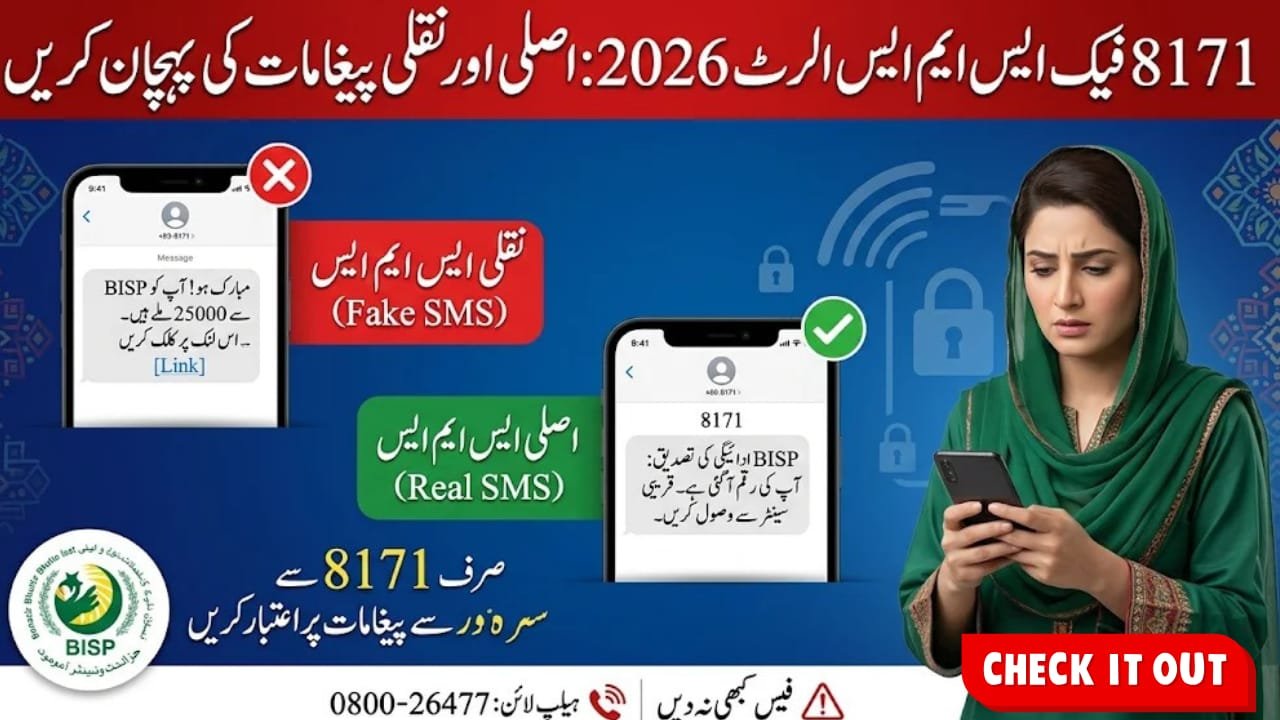
8171 Fake SMS Alert 2026
8171 Fake SMS Alert 2026 is important for BISP beneficiaries who receive messages about financial assistance, eligibility, and payment confirmation. Unfortunately, scammers often misuse the Benazir Income Support Programme’s name to deceive deserving families. They send fake payment notifications, demand registration fees, and ask people to share personal information. BISP has repeatedly warned beneficiaries that 8171 is its only official SMS number. This guide explains how to recognize fraudulent messages, protect your CNIC information, verify payment notifications, and report suspicious activities.
Quick Information Table
| Information | Details |
|---|---|
| Program | Benazir Income Support Programme |
| Department | Government of Pakistan |
| Official SMS Number | 8171 |
| Complaint Helpline | 0800-26477 |
| Registration Fee | Free |
| Survey Fee | Free |
| Main Risk | Fake SMS, calls and payment scams |
| Target Audience | BISP beneficiaries and applicants |
| Verification Method | Official 8171 service |
Overview of 8171 Fake SMS Alert 2026
BISP provides financial assistance to eligible low-income families through different social protection programmes. However, scammers sometimes pretend to represent BISP and send misleading messages to beneficiaries.
These messages may claim that a payment has been approved, registration is incomplete, or financial assistance is waiting for collection. Some scammers also contact people through phone calls and social media.
According to BISP, 8171 is the only official number used to send programme-related SMS messages. Any message from another number claiming to represent BISP should be treated as fraudulent.
Latest Official Updates About BISP Fake Messages
BISP Chairperson Senator Rubina Khalid has repeatedly warned beneficiaries about fraudulent messages and individuals misusing the programme’s name.
In an official press release dated January 21, 2025, BISP confirmed that messages are sent only through 8171. The department also clarified that registration and surveys are free and conducted through designated BISP Tehsil Offices and mobile registration vans.
Furthermore, BISP and the Pakistan Telecommunication Authority (PTA) discussed measures to combat fake SMS messages and misleading websites operating under BISP’s name.
How to Identify Fake BISP Messages
1. Check the Sender’s Number
Always check the sender before trusting a message. Genuine BISP SMS notifications come from 8171. Messages from ordinary mobile numbers claiming to offer BISP payments are fraudulent.
2. Beware of Registration Fees
BISP does not charge applicants for registration or the NSER survey. Anyone demanding money for registration, eligibility confirmation, or payment release is attempting to deceive you.
3. Avoid Suspicious Links
Some fraudulent messages contain links that lead to fake websites. These websites may request CNIC numbers, mobile details, or other personal information.
Never enter sensitive information on an unfamiliar website.
4. Never Share Your Personal Information
Do not share the following information with unknown callers or suspicious contacts:
- CNIC photographs or unnecessary identity details.
- Bank account passwords.
- ATM PIN codes.
- OTP verification codes.
- Mobile wallet passwords.
- Biometric information with unauthorized individuals.
What Should You Do After Receiving a Fake SMS?
Follow these steps to protect yourself:
- Do not reply to suspicious messages.
- Avoid clicking links received from unknown numbers.
- Never transfer money to someone promising BISP approval.
- Do not share your CNIC, OTP, or account details.
- Verify your eligibility through the official 8171 service.
- Keep a screenshot of the suspicious message and sender’s number.
- Report the incident to the BISP helpline or relevant authorities.
How to Verify a Genuine BISP Message
You can verify your BISP status through the following methods:
Method 1: SMS Verification
- Open your mobile messaging application.
- Enter your 13-digit CNIC number.
- Send it directly to 8171.
- Wait for the official response.
Method 2: Online Verification
- Visit the official 8171 BISP portal.
- Enter your CNIC number.
- Complete the displayed verification step.
- Check the eligibility information.
Method 3: BISP Tehsil Office
Visit your nearest BISP Tehsil Office if you receive confusing information or need help with your registration and payment status.
How to Report BISP Scams
If someone demands money or sends fraudulent payment messages, contact the BISP helpline at 0800-26477 or visit the nearest BISP office.
You can also report suspicious telecommunications activity to the Pakistan Telecommunication Authority through its complaint channels.
If you have already shared banking information or lost money, immediately contact your bank or mobile wallet provider to secure your account.
Frequently Asked Questions
1. What is the official BISP SMS number in 2026?
8171 is the only official SMS number used by BISP to communicate programme-related information to beneficiaries.
2. Does BISP charge a registration fee?
No. BISP registration and the NSER survey are completely free. Do not pay agents or unauthorized individuals.
3. How can I identify a fake 8171 message?
Check the sender’s number. Any message claiming to represent BISP from a number other than 8171 is fraudulent.
4. What is the BISP complaint helpline?
Beneficiaries can contact the BISP toll-free helpline at 0800-26477 for complaints and assistance.
5. What should I do if I share my CNIC with a scammer?
Stop communicating with the suspicious person, secure your financial accounts if necessary, and report the incident to BISP and the relevant authorities.
Conclusion
The 8171 Fake SMS Alert 2026 reminds BISP beneficiaries to remain careful when receiving messages about financial assistance and payment updates. Always verify information through official BISP channels and remember that registration and surveys are free. Never share your OTP, PIN, or banking passwords with unknown individuals. If you receive a suspicious message or someone demands money in the name of BISP, report the incident through the official complaint helpline. Staying informed and following these precautions can help protect your personal information and financial assistance.